Nazca Lines Flight from Cusco and Arequipa: Connection Guide
Every week, someone sitting in a cafe in San Blas pulls up a map and wonders if they can hop on a morning nazca lines flight from cusco before heading down to the Sacred Valley. It seems simple on paper. Peru looks deceptively narrow on standard Mercator projections, and the straight-line distance between the Inca capital and the desert pampa is only about 380 kilometers. But the Andes don't care about straight lines. Massive, jagged granite ridges climb above 4,500 meters between the two points, which means small, unpressurized Cessna tourist planes cannot make that run.
If you want to see the geoglyphs while basing your trip in southern Peru, you have to build a real transit strategy. Booking a cusco to nazca lines flight actually means booking an overland crossing or a multi-leg journey, followed by a local aerial tour once you reach the desert floor. The same holds true if you start from the White City, though the trip along the coast is considerably less nauseating. Here is the unvarnished reality of connecting these hubs, what it actually costs, and how to avoid wasting two days sitting in transit purgatory.
Book your nazca lines flight experience:
The Hard Truth About Flights from Cusco to the Desert
There is no commercial passenger airline flying directly between Alejandro Velasco Astete Airport in Cusco and Maria Reiche Neuman Airport in Nazca. Nazca's runway lacks instrument landing systems, operates under strict visual flight rules, and handles single-engine Cessnas and Caravans, not Airbus jets. If someone sells you a "flight over nazca lines from cusco" as a single-day package, they are selling you a commercial flight back to Lima, a six-hour private shuttle south into the desert, a 35-minute aerial hop, and a whole lot of exhaustion.
I learned this the hard way years ago. You either take the long, winding bus through the mountains, or you fly northwest to the coast and travel down. The direct bus route leaves Cusco, climbs over cold mountain passes toward Abancay and Puquio, and drops roughly 3,400 vertical meters down to the Pacific coastal basin. It takes roughly 14 to 16 hours. The asphalt is good now, fully paved, but the road bends like a dropped piece of string for eight solid hours. If you get motion sick on winding mountain roads, this transit will test your sanity.
Note: Flash flooding and rockslides between Abancay and Puquio frequently close the mountain highway during the wet season from January through March. If you travel during these months, avoid the direct mountain bus and route through Arequipa or Lima instead.
A few private charter outfits in Lima will quote you a twin-engine turboprop from Cusco to Pisco. It runs around $3,800 for the plane, carries up to six passengers, and requires perfect weather windows over the spine of the continent. For normal humans traveling on standard budgets, that is completely out of reach. You will be traveling over land.
Route Options: Cusco to Nazca Step by Step
When mapping your journey, you have three realistic ways to make this connection work. Each trade-offs time against comfort, and your choice depends largely on how well your body handles high-altitude switchbacks at two in the morning.
| Route Method | Total Travel Time | Approximate Cost (USD) | Comfort Level | Best For |
|---|---|---|---|---|
| Direct Overnight Bus | 14 - 16 hours | $35 - $65 | Rough mountain turns | Budget backpackers with strong stomachs |
| Fly to Lima + Bus South | 8 - 9 hours total | $110 - $170 | High, smooth highway | Travelers short on time who hate curves |
| Bus via Arequipa (Split) | 20 hours (split across 2 days) | $55 - $90 | Moderate, split elevation | Anyone wanting to explore Colca Canyon first |
The direct overnight bus operated by Cruz del Sur or Civa remains the default choice for budget travelers. Buses depart Cusco in the late afternoon, usually between 4:00 PM and 6:30 PM. You wake up around dawn as the bus crawls through the dust outside Palpa, pulling into Nazca just in time for breakfast. You get a fully reclining seat if you pay for the lower deck, usually around $52 for a 160-degree or 180-degree lie-flat sleeper. Bring warm layers. Even with the bus heater humming, high-altitude passes outside Puquio drop below freezing around 3:00 AM.
The alternative is flying back to Lima on an early morning flight, catching a pre-arranged transfer or a luxury bus down the Pan-American Highway to Ica or Nazca. It sounds counterintuitive to fly backwards, away from southern Peru, but flying to Lima takes an hour and ten minutes, and the drive down the coast is dead straight, flat, and sea level. You skip the mountain bends completely.
Connecting from Arequipa: The Smarter Coastal Approach
If your itinerary allows you to choose your direction, traveling between Arequipa and Nazca is vastly superior to coming straight from Cusco. Taking nazca lines flights from arequipa involves a much friendlier transit corridor. Arequipa sits at 2,325 meters, so you are already halfway down from the high altiplano, and the highway cuts westward straight to the ocean before turning north along the Panamericana Sur.
The ride takes between nine and ten hours. Most travelers book the overnight service leaving Arequipa's Terminal Terrestre around 8:30 PM, which puts you at the Nazca bus terminal at roughly 6:00 AM. That timing is nearly perfect. You step off the bus, drop your heavy bags at a luggage storage locker or your hotel, grab a strong coffee with some fresh rolls, and head straight to the airport for the earliest flight block of the morning.
Pro tip: Book a seat on the left side of the bus when traveling north from Arequipa to Nazca if you take a daytime service. You will get uninterrupted views of the Pacific coastline crashing against the desert cliffs for hours.
If you prefer not to lose an entire night to a bus seat, day buses do run this leg. They leave Arequipa around 8:00 AM and arrive in Nazca before sundown. The landscape is wildly desolate. Red sand, black volcanic rock, and gray ocean water stretch for hundreds of kilometers with almost nothing in between except the occasional fishing village like Camana or Chala. It gives you a real visceral sense of how isolated these coastal desert cultures were two thousand years ago.
Book your nazca lines flight experience:
Arriving at the Airport and Taking Your Flight
Once you actually reach the town of Nazca, logistics become much simpler. Maria Reiche Neuman Airport sits about five kilometers north of the town center, right alongside the highway. A taxi from the bus terminal or the Plaza de Armas costs around 8 to 10 Peruvian soles, which is less than three dollars. Do not pay more than that.
When booking, research the current Nazca lines flight cost before you arrive at the counters, because walk-up prices swing wildly depending on how many tourists rolled into town that morning. Typical prices range from $75 to $110 per person for the standard 35-minute circuit, plus an airport passenger fee of 77 soles and a tourist ticket fee that you must pay in cash at separate municipal counters inside the terminal.
The airport process works like this:
- Weigh-in station: Every single passenger steps onto a scale with their daypack so ground crews can calculate fuel distribution and balance the aircraft.
- Security check: A basic x-ray and metal detector screening; large backpacks and rolling suitcases stay behind in the airline's secure luggage room.
- Waiting lounge: You watch a mandatory safety video while waiting for your boarding group to be called by pilot and co-pilot teams.
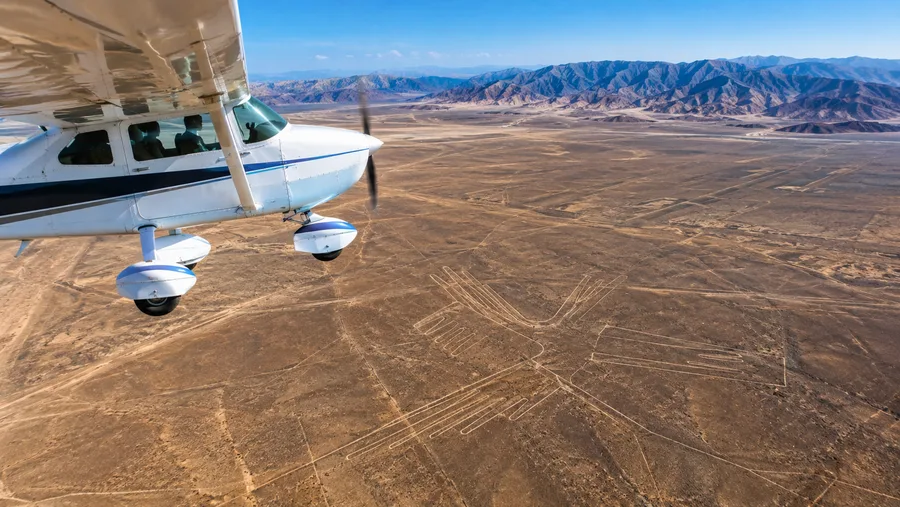
- Boarding: Ground staff lead you out across the windy tarmac to your designated Cessna 207 or Grand Caravan.
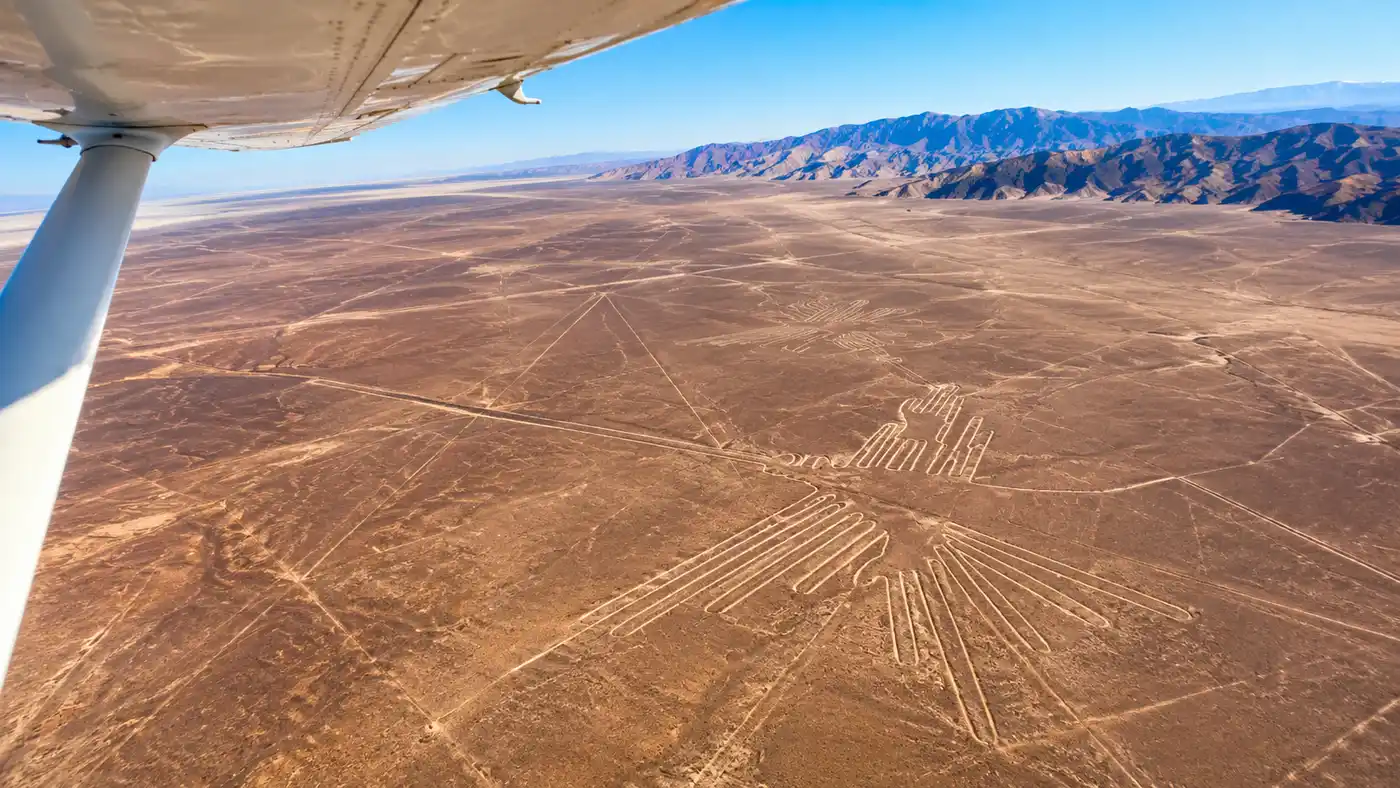
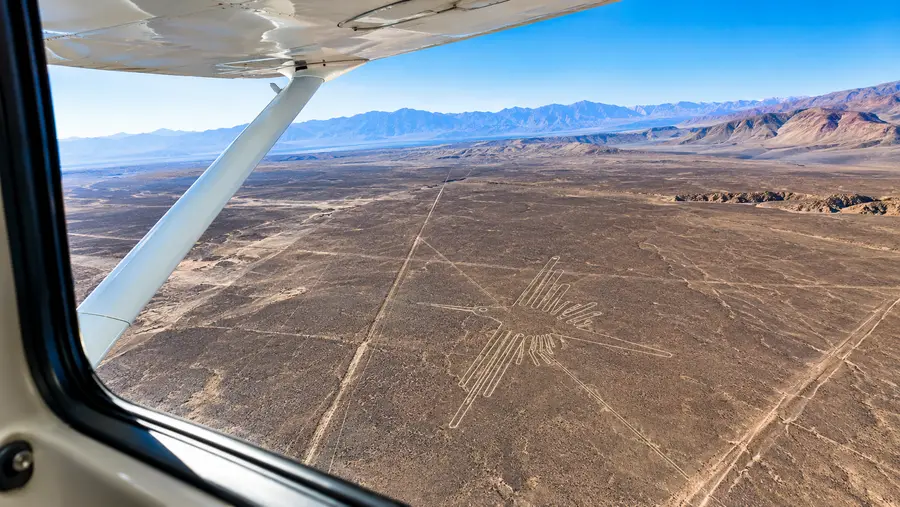
The flight itself is athletic. To let passengers on both sides of the aircraft see each figure clearly, pilots bank hard left, level out, and immediately bank hard right over every single geoglyph. You will circle the Monkey, the Hummingbird, the Spider, and the Astronaut at 60-degree angles. If you have any history of motion sickness, take dimenhydrinate 45 minutes before takeoff. Do not eat a large breakfast of eggs and fried potatoes at the bus terminal right before you walk onto the tarmac. Keep it light: dry toast, tea, water.
Building a Smooth Southern Peru Loop
The biggest mistake travelers make is treating their trip as an out-and-back trek. People fly to Cusco, finish Machu Picchu, take a grueling bus to Nazca, and then wonder how to get back up the mountain. Backtracking across the Andes burns precious vacation days and empties your wallet on repetitive transport.
Instead, run southern Peru in a single directional loop. Start in Lima, ride the coast south, and let your body gradually adjust to higher ground as you move east.
- Stop 1: Lima to Paracas: A simple four-hour coastal drive for seafood and wildlife around the Ballestas Islands.
- Stop 2: Paracas to Nazca: Three hours further down the Pan-American Highway to fly over the lines while you are still at sea level.
- Stop 3: Nazca to Arequipa: An overnight or daytime ride down to the White City, stepping your altitude up to 2,325 meters.
- Stop 4: Arequipa to Colca Canyon and Cusco: Acclimatize further in the canyon before taking a scenic bus through the high pass to Cusco at 3,400 meters.
This sequence solves two massive issues at once. First, it completely eliminates the awful 15-hour mountain descent from Cusco to Nazca. Second, it lets you acclimatize gradually. Altitude sickness ruins more trips in the Andes than bad street food. Gaining elevation in sensible steps from sea level up through Arequipa makes your eventual arrival in Cusco feel totally manageable.
If you have already finished your time in Cusco and Nazca is your last priority before flying home, just take the bus to Nazca, fly the lines mid-morning, and immediately continue north toward Lima that afternoon. Cruz del Sur, Movil Bus, and Peru Hop all run frequent departures northbound from Nazca through Ica, Paracas, and straight back to the capital.
Frequently Asked Questions about nazca lines flight from cusco
Can I do a day trip from Cusco to the Nazca Lines?
No. Commercial passenger flights do not run between Cusco and Nazca, and the overland drive takes roughly 15 hours each way across the Andes. A day trip between these two destinations is geographically impossible unless you hire a private multi-thousand-dollar charter aircraft.
Is it better to travel to Nazca from Cusco or from Arequipa?
Traveling from Arequipa is much better. The road is flatter, follows the coast for long stretches, drops less drastic vertical elevation, and takes roughly 9 to 10 hours compared to the twisting 15-hour mountain route from Cusco.
Do I need to book my flight tickets before arriving in Nazca?
During the busy dry months of June, July, and August, booking a couple of weeks ahead guarantees you a morning departure window when winds are calmest. Outside peak season, you can often walk into Maria Reiche Airport in the morning and secure a seat on the next available hopper within an hour or two.
Quick Reference
- No direct commercial flights cross the Andes between Cusco and Nazca
- Cusco-to-Nazca overnight bus: 14 to 16 hours via Puquio
- Arequipa-to-Nazca overnight bus: 9 to 10 hours along Panamericana Sur
- Airport tax and tourist fees: roughly 107 soles total (paid in cash)
- Best flight conditions: 7:00 AM to 10:30 AM before thermal winds kick up
Book your nazca lines flight experience:
The Bottom Line
Do not let slick tour agency marketing fool you into thinking a nazca lines flight from cusco is an easy afternoon excursion. It takes real planning, a solid night of ground travel, and a willingness to trade Andean thin air for dry desert heat. If you connect through Arequipa or loop down from Lima along the coast, the transit turns into an incredible cross-section of Peru's diverse topography rather than an exhausting logistical slog. Pack your motion sickness pills, plan an extra buffer day for weather delays, and treat the long transit as an adventure in itself.
Read more about nazca lines flight.