Nazca Lines Flight Safety: Accidents, Risks, and Safe Operators
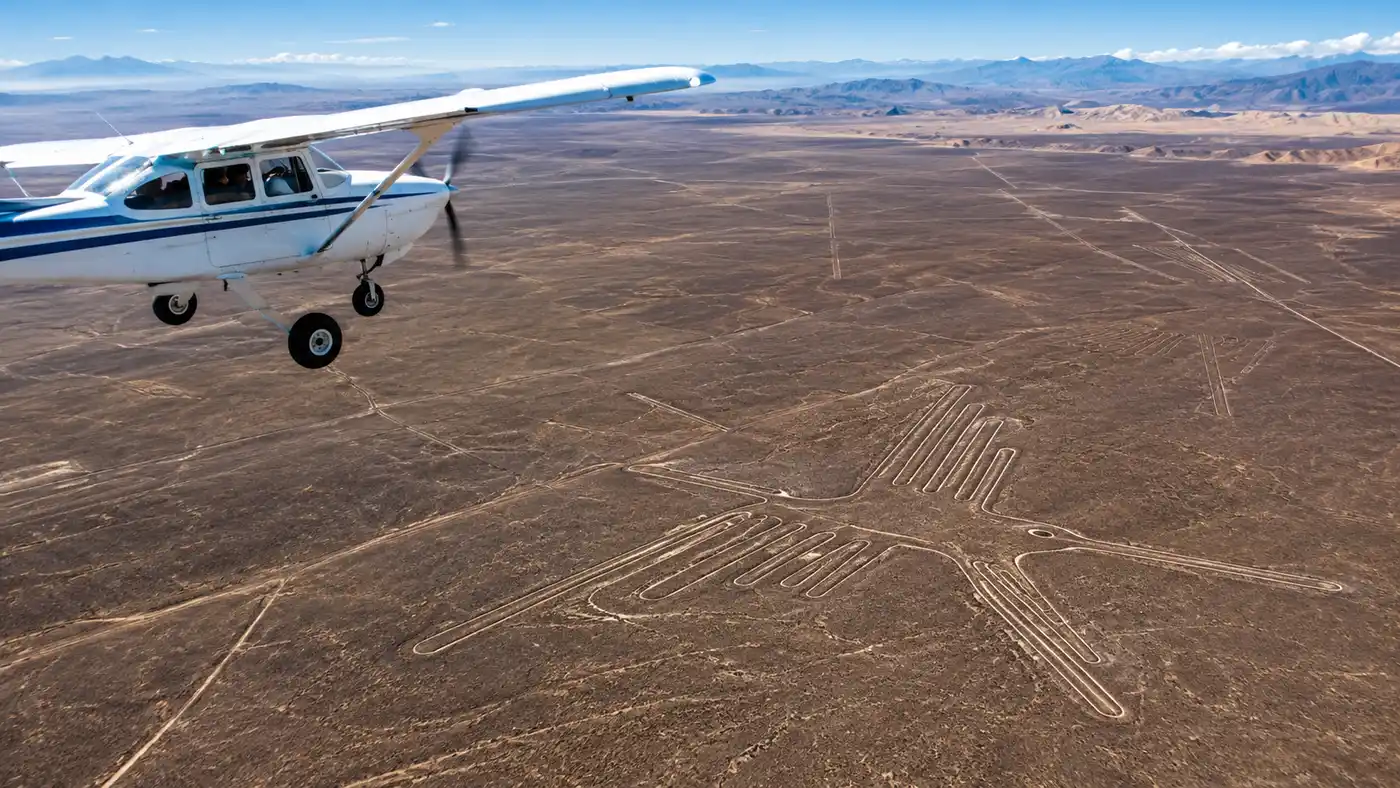
Standing on the sunbaked tarmac at Maria Reiche Airport in Nazca, watching a tiny six-seater plane rattle to life, it is completely normal to feel your stomach drop. You smell the sharp bite of aviation fuel drifting across the desert heat. The aircraft looks smaller in person than it does on Instagram, and the vast coastal wasteland stretching beyond the runway does not look forgiving. When you evaluate nazca lines flight safety, you are balancing the desire to see a legendary ancient riddle against the uncomfortable reality of boarding a light aircraft in South America.
Ten or fifteen years ago, boarding one of these flights was genuinely playing roulette with your well-being. Today, things run very differently on the ground, yet the lingering reputation still haunts travelers planning their Peru itineraries. Getting up into the desert sky safely comes down to understanding what went wrong in the past, what the Peruvian government changed, and which operators actually take maintenance seriously instead of cutting corners to shave thirty dollars off a ticket.
Book your nazca lines flight experience:
The Grim History: Past Nazca Lines Flight Accidents and What Changed
We need to talk honestly about the track record. Between 2008 and 2010, the safety record around Nazca was an absolute disaster. Small air taxi companies were operating like wildcat bush pilots. Single pilots were flying exhausted on back-to-back runs, maintenance logs were forged, and mechanical failures led to multiple fatal crashes that killed over a dozen international tourists. It reached a point where embassies issued severe travel advisories, warning citizens to stay off the planes entirely.
The breaking point came in 2010 after a horrific Air Nasca crash killed all six people aboard. The Peruvian Ministry of Transport and Communications (MTC) along with the civil aviation authority (DGAC) finally stepped in with an iron fist. They grounded virtually half the active fleet in a single week. Operators were forced to prove every bolt and airframe met rigorous standards, and fly-by-night companies vanished overnight because they could not afford the new compliance protocols.
Safety improved dramatically, though aviation is never entirely without risk. A tragic crash occurred in February 2022, when an Aero Santos Cessna 207 went down near the airport, resulting in seven fatalities. Investigations pointed to engine trouble combined with difficult low-altitude maneuvering. Incidents like this are rare now, but they prove that keeping yourself safe means doing real homework rather than walking up to the counter offering the cheapest voucher.
Note: Under Peruvian civil aviation law, every single commercial tourist flight over the Nazca Lines must have two fully licensed pilots in the cockpit. If you ever board an aircraft and see only one pilot up front, refuse to fly and report it immediately.
Are Nazca Lines Flights Safe Today? Modern Aviation Rules in the Desert
Flying over the desert is far more regulated than it was a decade ago. Maria Reiche Airport received massive infrastructure upgrades, including proper radar monitoring, a modern control tower, and round-the-clock DGAC inspectors watching every single takeoff. Every plane is weighed down to the kilogram. Before you walk onto the apron, you and your backpack are weighed on commercial scales to balance the aircraft's center of gravity. Pilots cannot guess passenger weights anymore.
The climate here creates its own set of problems. Around 11:30 AM, the southern desert heats up like an oven. Hot air rises violently from the dry plains, creating severe thermal updrafts and violent pocket turbulence. By early afternoon, the famous Paracas winds sweep in from the Pacific, whipping sand across the runway and dropping visibility to near zero. Safe operators stop flying the moment crosswinds exceed roughly 15 knots, grounding planes until the desert settles down.
Are nazca lines flights dangerous compared to other activities in Peru? Statistically, you face a far higher risk of serious injury sitting on an overnight intercity bus careening down the mountain hairpins of the Andes. That does not make small-plane aviation risk-free, but context matters. If you fly with an established outfit in the cool, stable air of early morning, you are taking a well-managed, calculated risk.
Choosing the Safest Company for Nazca Line Flight: Operators Compared
Finding the safests company for nazca line flight requires looking at two factors: the age and model of the aircraft, and company investment in maintenance infrastructure. Some companies fly older Cessna 206 and 207 piston-engine planes. Others run the Cessna Grand Caravan 208B, a much larger, turbine-powered aircraft that carries 12 passengers. The Grand Caravan is widely considered the gold standard for scenic flights. It is heavier, handles turbulence far better, features modern glass cockpits, and uses a Pratt & Whitney turboprop engine known globally for bulletproof reliability.
Movil Air and AeroNasca are the two heavyweights operating out of Nazca. Movil Air is an offshoot of one of Peru's largest transport groups, operating newer Grand Caravans with seasoned crews and strict corporate safety standards. Alas Peruanas also has a solid reputation, operating smaller Cessnas with a clean contemporary safety record. If you are comparing Nazca flight costs, remember that paying an extra $30 or $40 almost always translates directly to better maintenance standards and newer planes.
Pro tip: Request the first flight slot of the morning between 7:00 AM and 8:30 AM when reserving your seat. The desert atmosphere is calmest at dawn, giving you smoother air and reducing the chance of thermal turbulence.
Here is how the main operators compare based on fleet profile and operating standards:
| Operator | Primary Aircraft | Passenger Capacity | Engine Type | Safety Distinction |
|---|---|---|---|---|
| Movil Air | Cessna Grand Caravan 208B | 12 passengers | Turboprop | Full glass cockpit, rigorous corporate maintenance |
| AeroNasca | Cessna 206 / 207 / 208 | 6 to 12 passengers | Piston / Turboprop | Largest local fleet, GPS real-time tracking |
| Alas Peruanas | Cessna 206 / 207 | 4 to 6 passengers | Piston | Small group focus, consistent safety record since 2011 |
| Aero Diana | Cessna Grand Caravan | 12 passengers | Turboprop | Dedicated charter focus, high pilot hour requirements |
Booking with a top-tier operator gives you peace of mind. When booking your Nazca Lines flight, always confirm the specific aircraft model you will be flying on, especially if you have a nervous stomach and prefer the steadier ride of a Caravan.
Book your nazca lines flight experience:
The Less Obvious Risk: Sickness, Vertigo, and Physical Demands
When people worry about Nazca lines injury flights, they usually envision engine trouble. In reality, the most frequent medical issues involve extreme motion sickness, fainting, dehydration, and panic attacks inside the cabin. This flight is not a gentle glide along a straight path. It is an intense, disorienting 30-minute aerial gymnastics session.
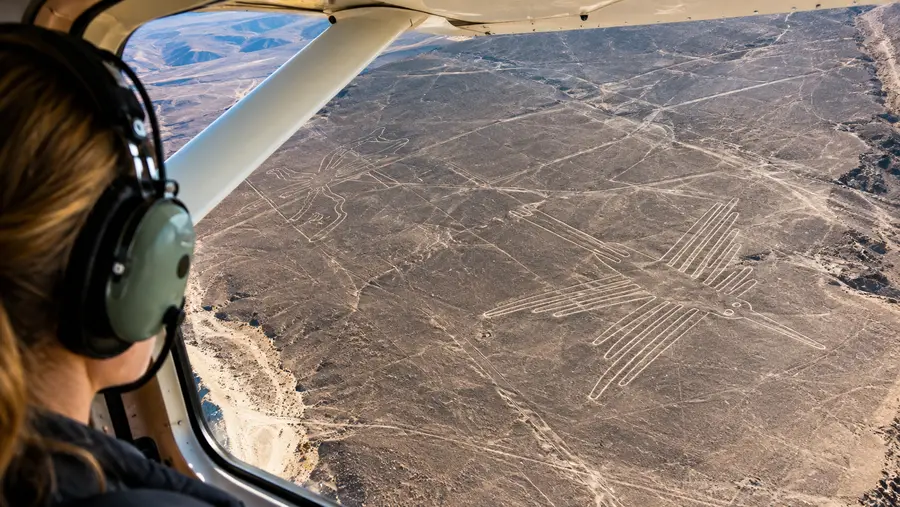
To let passengers on both sides of the aircraft see the figures, the pilot banks the plane sharply at a 45-degree angle to the left, circles the Hummingbird twice, pulls level, and immediately banks 45 degrees to the right for the other side. This repeats over twelve distinct figures. Your inner ear takes a massive beating from the rapid vestibular shifting. Even travelers with iron stomachs regularly walk down the cabin steps looking grey and holding sick bags.
You can drastically reduce the physical toll by taking basic precautions before you leave your hotel room:
- Motion sickness medication: take dimenhydrinate (Dramamine) or wear an acupressure band roughly 45 minutes before stepping onto the airfield.
- Skip the heavy breakfast: avoid milky coffee, eggs, and fried foods; eat a single piece of dry toast or a plain banana.
- Keep your eyes on the horizon: when the plane tilts into a steep bank, avoid staring through the camera viewfinder the whole time, which triggers instant spatial disorientation.
- Use the air vents: twist the overhead nozzle directly onto your face the second you sit down, as stagnant heat inside small cabins accelerates nausea.
- Drink plain water early: sip small amounts of water an hour before the flight so you are hydrated without having a sloshing stomach during steep maneuvers.
Red Flags: When to Walk Away from a Flight
Intuition matters when dealing with small aviation. If something feels off at the airfield, speak up or walk away. You are the customer, and your life is worth more than a non-refundable deposit.
The atmosphere at Maria Reiche Airport can feel chaotic during peak morning rushes. Touts mill around outside the gate trying to steer tourists toward budget counters. That is normal local commerce, but what happens inside the security checkpoint needs to be orderly and clinical. Pay attention to how the ground crew handles passengers and equipment.
Here are several red flags that should make you step away from the boarding gate:
- Solo pilot operations: any attempt to board a tourist flight without both a pilot and co-pilot present in the cockpit.
- Skipping the passenger weigh-in: an operator that merely asks your weight on paper rather than placing you on the scale.
- Visible fluid leaks: dark oil puddles pooling beneath the engine cowling while the aircraft sits idle on the tarmac.
- Aggressive departure in bad weather: pilots insisting on launching when thick dust skirts the runway and the control tower advises caution.
- Excess baggage in the aisle: ground handlers cramming heavy backpacks between seats rather than securing them in the wing pods or tail cargo bay.
Honest operators will not hesitate to show you their certificates if you ask. They understand foreign travelers are nervous, and the reputable outfits take pride in showing off their clean cockpits and professional briefing rooms.
Frequently Asked Questions about nazca lines flight safety
Are Nazca lines flights safe for children and elderly travelers?
They are generally safe, but the severe g-forces and motion sickness make them very tough on children under five years old. Seniors with severe cardiovascular issues, spinal injuries, or acute inner ear disorders should consult a doctor, as the steep banking puts unusual pressure on the body.
How many Nazca lines flight accidents have occurred?
Between 2000 and 2010, the region recorded four major fatal crashes that led to an international overhaul of safety protocols. Between 2011 and today, only one fatal incident occurred, in February 2022. Overall safety has improved by orders of magnitude under current regulations.
Which is the safests company for Nazca line flight operations?
Movil Air is widely regarded as the safest operator because of their modern fleet of turbine Cessna Grand Caravan 208B aircraft and corporate maintenance backing. AeroNasca and Alas Peruanas also maintain reliable, compliant safety records.
Are Nazca lines flights dangerous in windy weather?
Strong winds, especially the afternoon Paracas gusts, create dangerous crosswinds and blind dust storms. Reputable operators cancel or postpone flights when wind speeds rise past safety margins, which is why morning departures are much safer.
Is it safer to fly from Nazca, Pisco, or Ica?
Flights departing Pisco use larger Cessna Grand Caravans exclusively and fly out of a modern international-grade airport with sophisticated radar systems. Nazca has shorter flight times over the lines, but Pisco offers a more controlled, modern commercial airline environment.
Quick Reference
- Mandatory two-pilot rule on every single commercial flight
- Grand Caravan turboprops handle turbulence better than small Cessnas
- Best flying window is between 7:00 AM and 9:30 AM
- Severe motion sickness is the most common physical problem
Book your nazca lines flight experience:
The Bottom Line: Is It Safe Enough to Board?
Every small-aircraft flight over an isolated desert involves a baseline degree of risk that you would not face riding a train or walking through a museum. You cannot eliminate that entirely when you strap into a single-engine plane thousands of feet above the earth. What you can do is eliminate the reckless variables. Stick to established, heavily reviewed companies like Movil Air or AeroNasca, fly at the break of dawn before the hot winds distort the air, listen to your gut, and leave the bargain-hunting for souvenir markets.
Read more about nazca lines flight.